Overview
Integration with Seegnal follows a set of implementation best practices designed to support clinical safety, workflow efficiency, scalability, and long-term maintainability.
Recommendations may vary according to the EHR technology, hosting model, security posture, and operational requirements of each organization. The guidance below reflects the deployment patterns that consistently produce the best clinical and technical outcomes across customer environments.
Triggers
Seegnal's primary integration points are embedded within the EHR point-of-care workflow. The two most common trigger points are:
- Open Chart
- Sign Orders
Open Chart allows proactive risk evaluation during chart review, while Sign Orders enables real-time prescription validation immediately prior to order submission.
Seegnal performs best when the Sign Orders workflow is positioned before final order completion, allowing clinicians to review and act upon recommendations prior to prescription finalization, either by modifying therapy, adjusting dosage, or explicitly bypassing the recommendation with clinical justification.
Wherever possible, organizations should avoid unnecessary workflow hard-stops and prioritize clinically meaningful interventions to minimize alert fatigue and support user adoption.
Performance
Seegnal is optimized for real-time clinical workflows and declares an average processing time of approximately 100 milliseconds per calculation request under standard operating conditions, excluding network latency and EHR-side processing overhead.
Organizations should assess expected request volumes based on:
- Number of active end users
- Patient population size
- Trigger frequency
- Configured clinical workflows
Recommended best practices include:
- API timeout handling and retry mechanisms
- Request caching where appropriate
- Load balancing for high-availability deployments
- Monitoring of response latency and throughput
Capacity planning should be performed jointly during implementation to ensure sustained clinical performance under peak operational load.
Environments
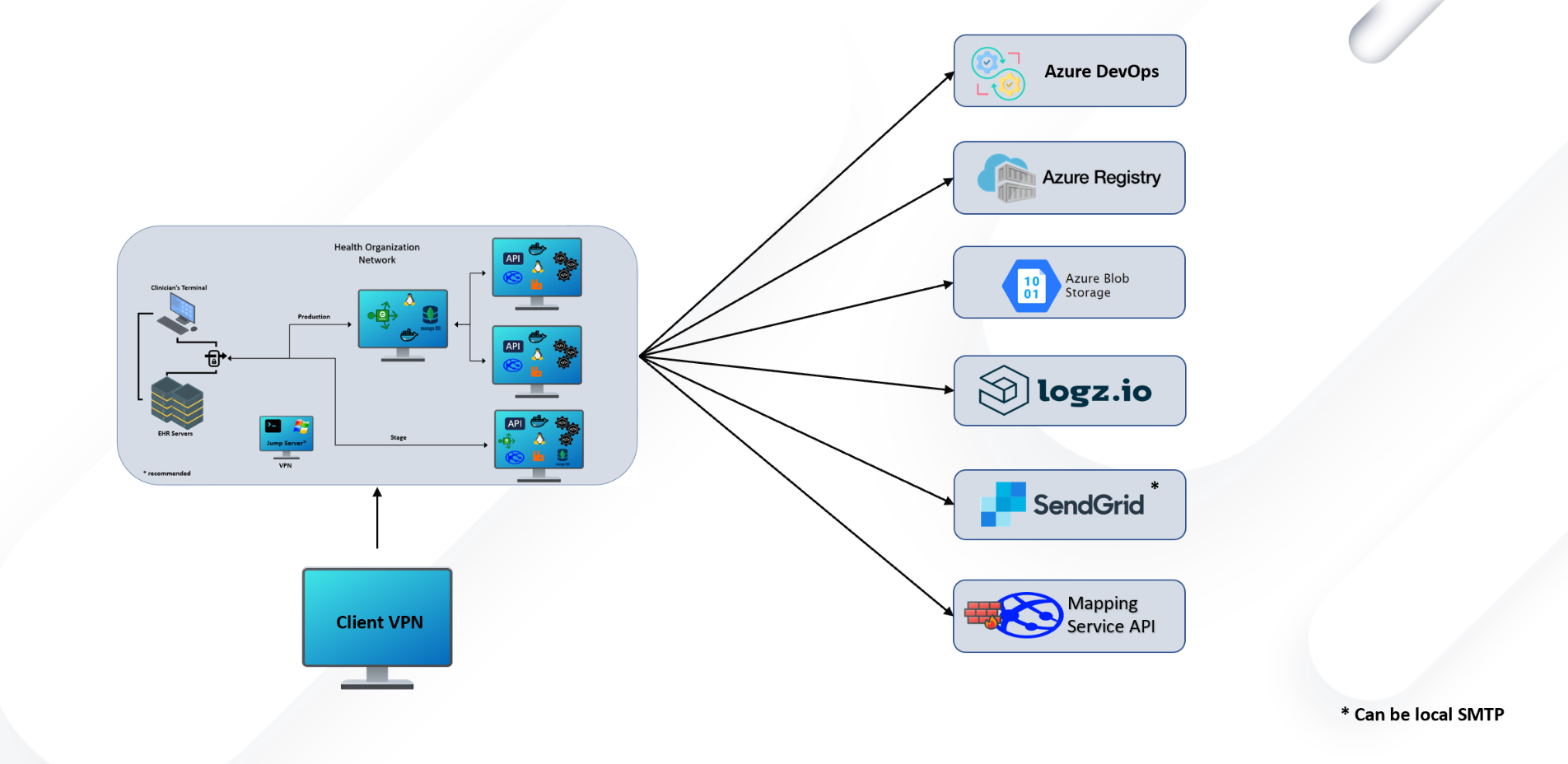
Each organization is provisioned with two dedicated environments that mirror one another, enabling safe change management from validation through to live clinical use.
Production
The live environment serving end users and real patient workflows. It runs the validated, approved configuration.
Stage
A pre-production mirror of Production used by the customer to validate new content, configuration changes, and integration updates. Changes are reviewed and signed off in Stage before being promoted to Production.
Integration Flows
Seegnal integrates directly into clinical workflows within the EHR, enabling real-time prescription analysis and actionable guidance at the point of care.
The following diagrams provide a high-level overview of:
- Core EMR trigger patterns
- Real-time API interaction flows
- UI launch and validation workflows
- Recommendation feedback and session handling
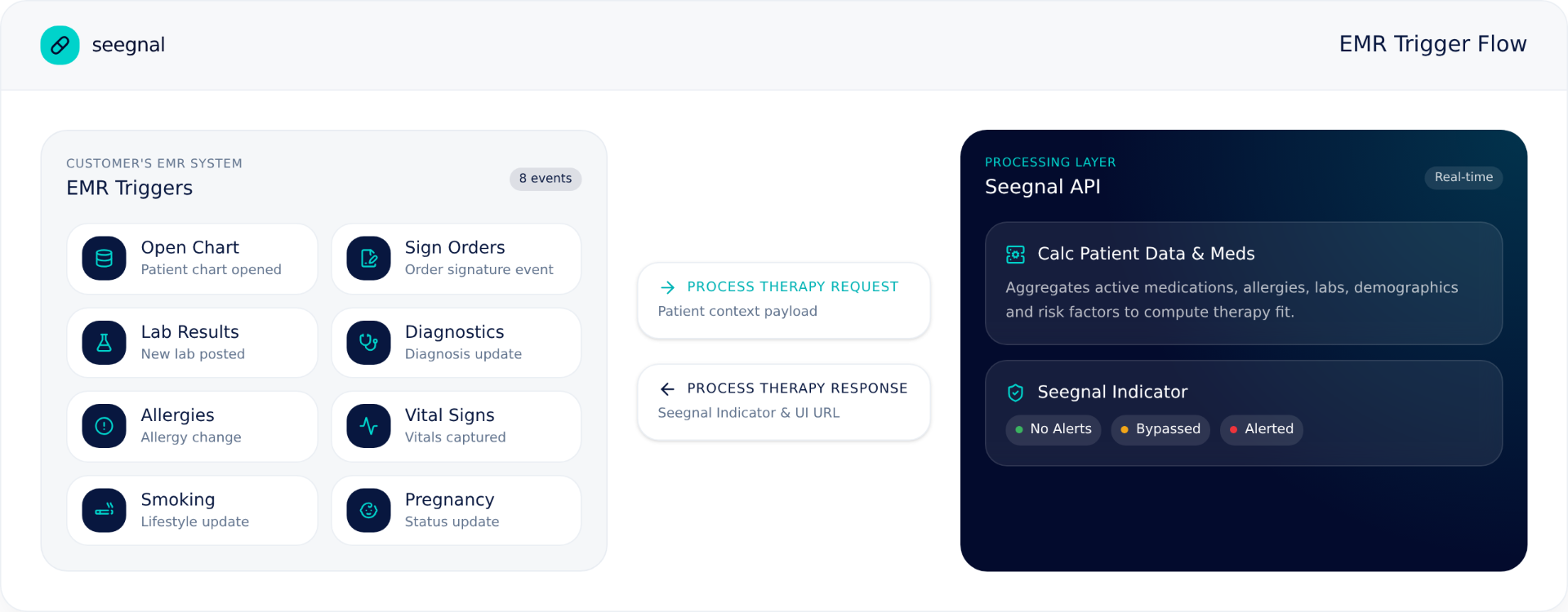
EMR Trigger Flow
This diagram illustrates the primary clinical and operational triggers that initiate Seegnal evaluations within the EHR workflow. Typical trigger points include medication ordering, chart access, laboratory updates, diagnostics, allergies, and other patient-context events.
The flow demonstrates how the EMR submits patient and medication context to Seegnal's API layer and receives a Seegnal indicator and launch URL for workflow continuation.
Integration & UI Workflow
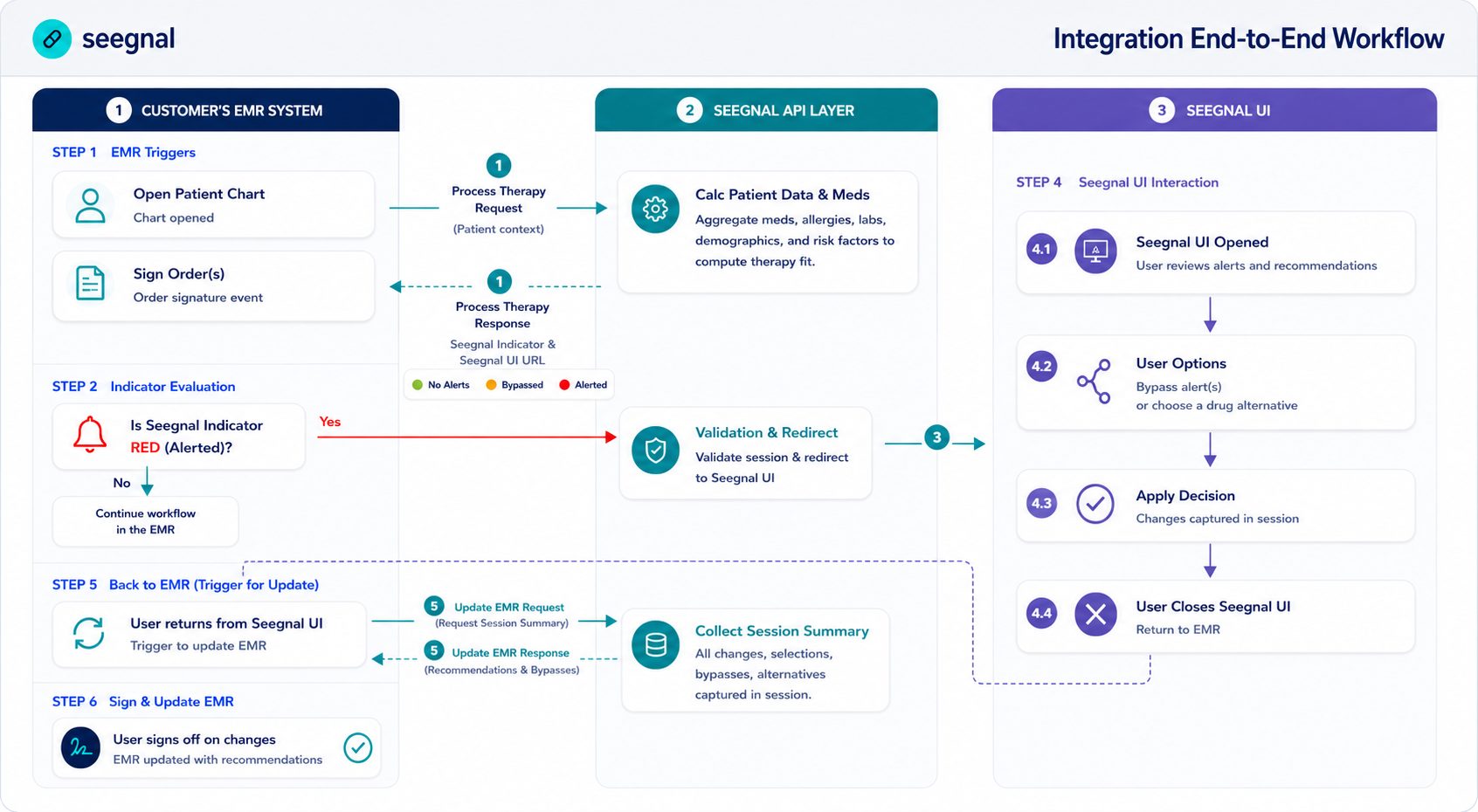
This diagram illustrates the end-to-end workflow between the EMR, Seegnal API, and the Seegnal user interface.
The flow demonstrates how clinicians launch Seegnal during prescribing workflows, review recommendations, modify or bypass therapy guidance, and return validated decisions back into the EMR workflow.
The process is designed to support real-time clinical decision support while minimizing workflow disruption and preserving physician efficiency.
Architecture
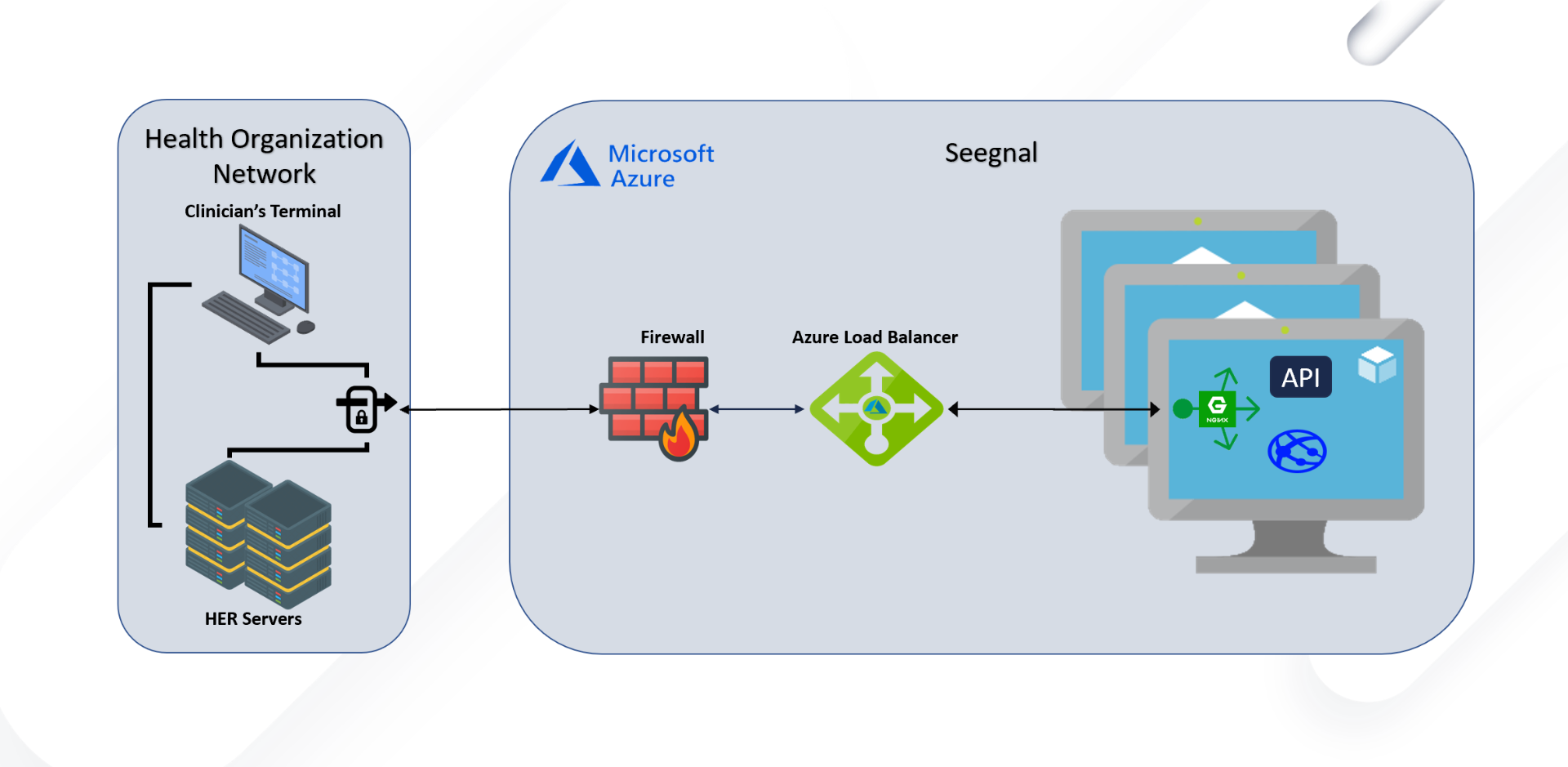
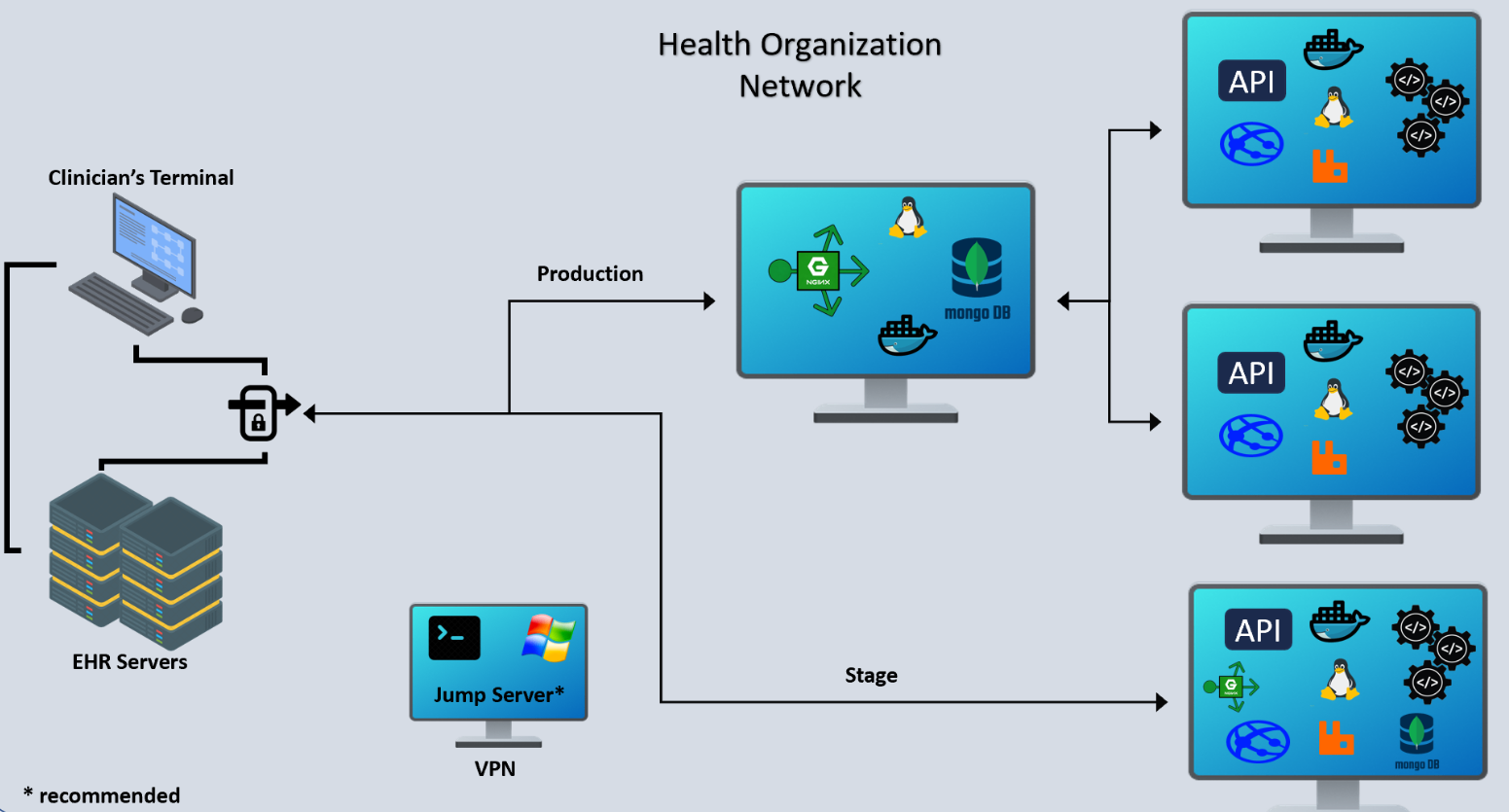
Seegnal supports multiple deployment models to align with organizational infrastructure, cybersecurity requirements, and operational policies.
Cloud
Recommended for organizations seeking simplified infrastructure management, scalability, centralized monitoring, and managed operational maintenance.
On-Premise
Recommended for organizations requiring local infrastructure hosting and tighter internal network control.
Hybrid
Recommended for organizations balancing local integration requirements with cloud-based application management and analytics capabilities.